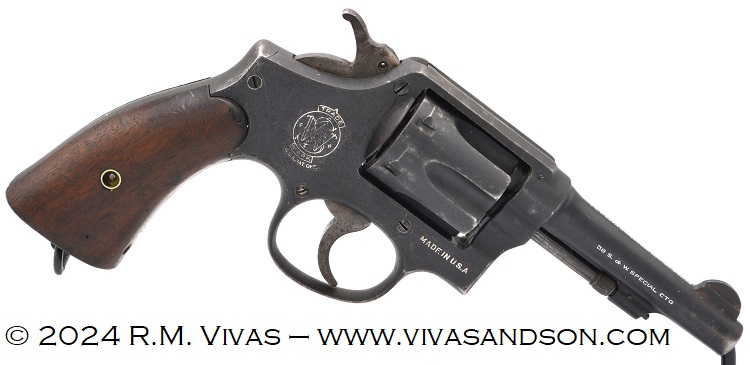
It’s generally held that the total production of Victory revolvers made by Smith & Wesson (S&W) for the Second World War was 811,119. There is a small bit of wiggle room in that figure but for my purposes, I’ll say ‘close enough’.
During WW2 the New York City Police Department (NYPD) took in approximately 850 Victory revolvers spread across three shipments under the auspices of the Defense Supplies Corp. (DSC). Charlie Pate in his excellent book, U.S. HANDGUNS OF WORLD WAR II – THE SECONDARY PISTOLS AND REVOLVERS, gives the background and history of the DSC and if one is unfamiliar with the DSC, that is as good a place as any to learn about it.
The first DSC shipment to NYPD was for 250 guns; this post is about one of them.
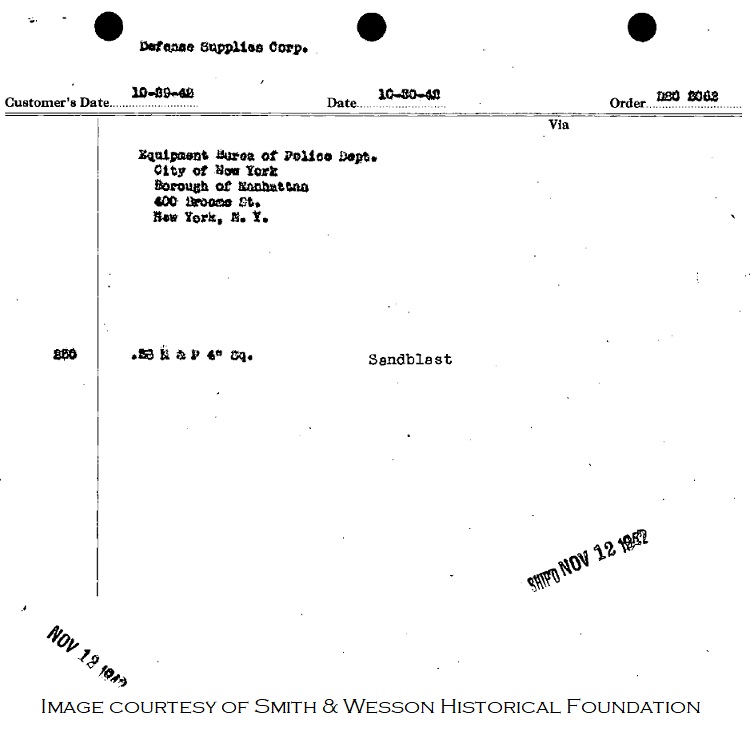
In this case, 250 4-inch Victory revolvers headed to NYPD ca. November 1942.
On the hunt for NYPD revolvers, I came across a Victory that had a 4-digit number unevenly handstamped upon the backstrap. I recognized that this is a -possible- indicator of an NYPD revolver, so I took a chance and purchased it.
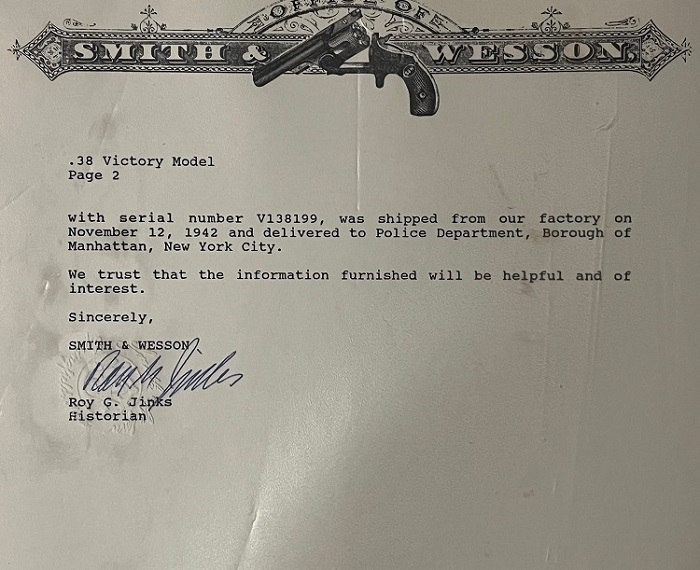
Naturally, the first step was to get a factory letter and it did not disappoint!
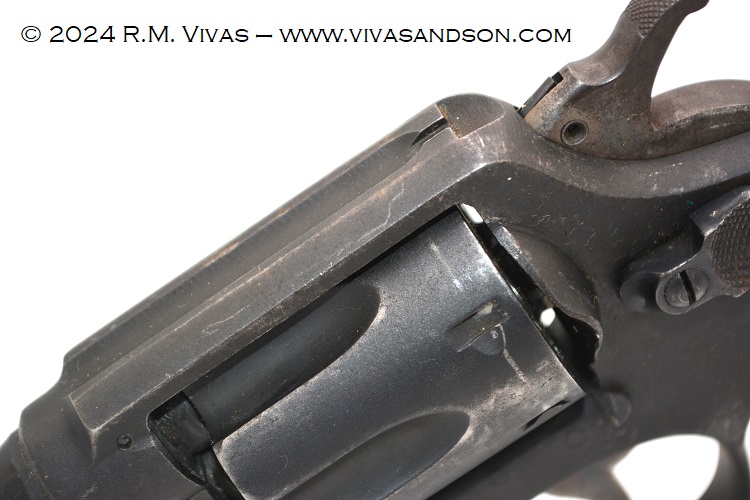
The gun itself was in fairly decent shape. Some finish wear but nothing outrageous:
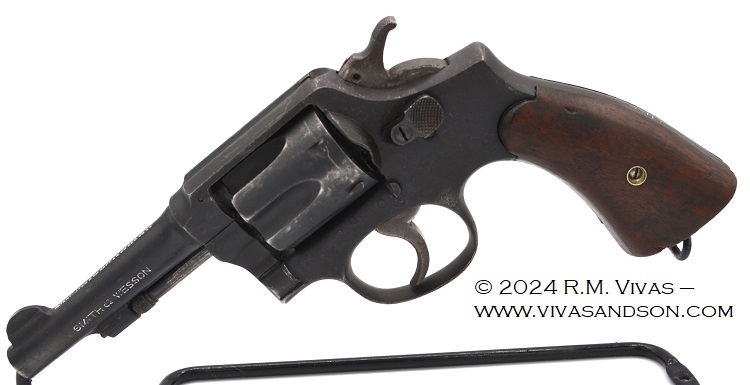

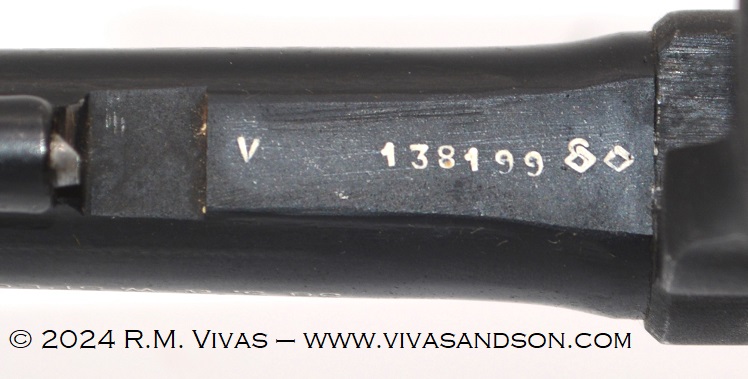
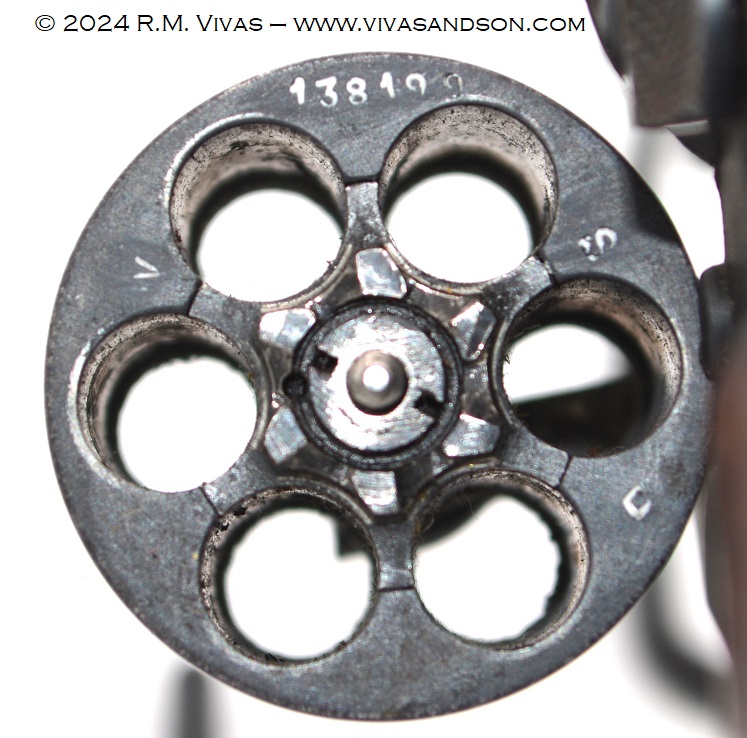
The gun is serial number V138199 and is devoid of any US Property markings.
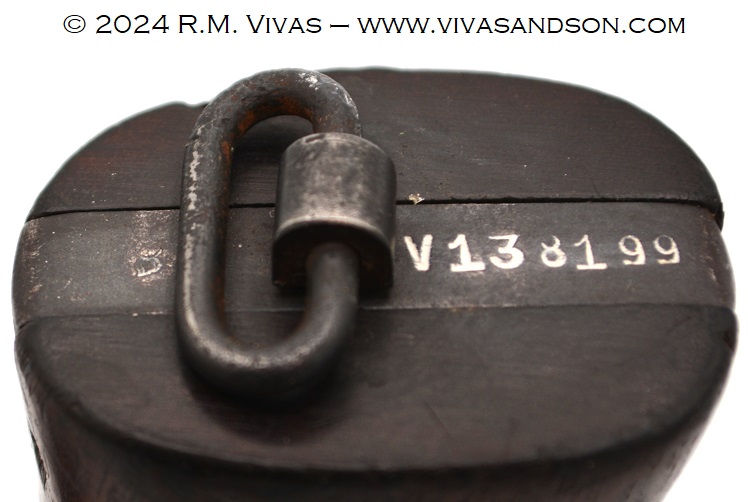
The only suggestion of Uncle Sam (other than the polish and finish) is a vestigial Ordnance Logo stamped on the butt:
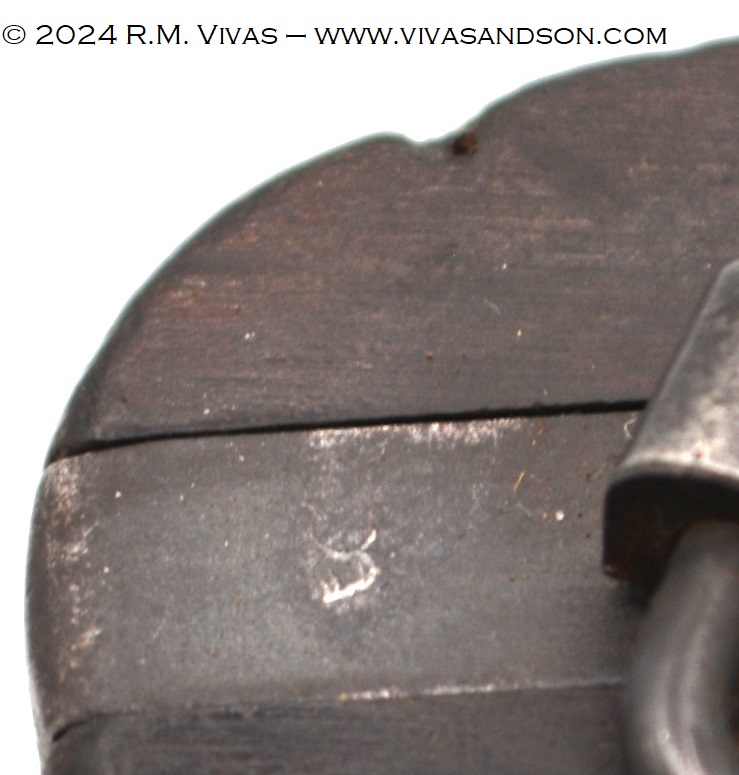
Normally, on a military Victory we would find some sort of U.S. Property marking, typically on the top strap, yet here we can see that the area is smooth and unstamped, nor any indications of a stamp being removed:
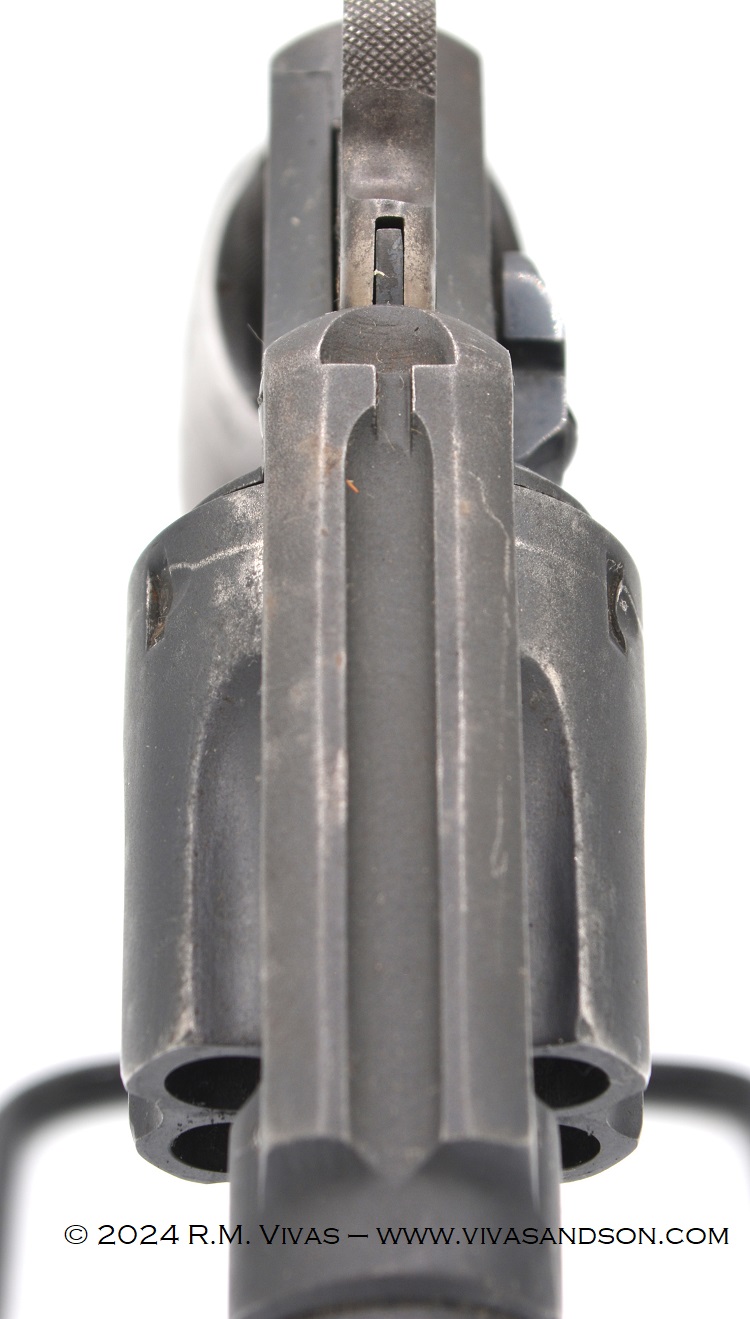
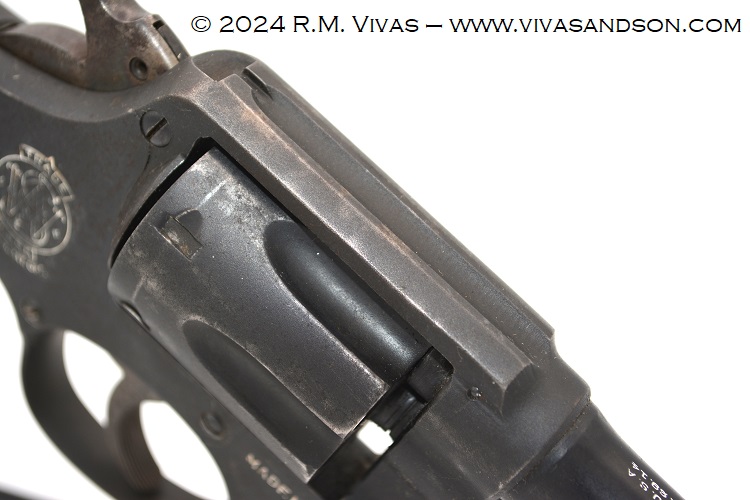
The barrel and cylinder both bear matching numbers:
On the backstrap, faintly stamped, was the number “2407” which was the shield number of the officer who owned the gun:

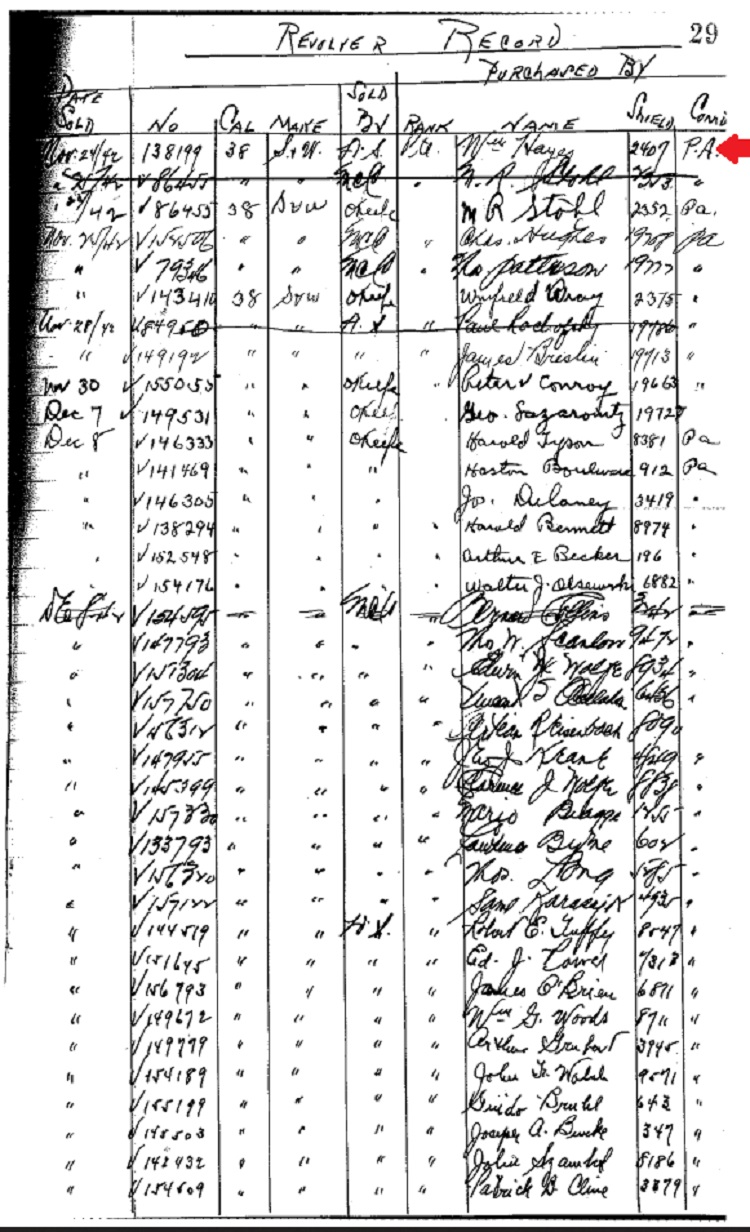
Running the serial number through my database, I found an entry for the gun in the NYPD Equipment Bureau Book 42-46 page 29 that recorded the gun as being sold on 24NOV42 to Probationary Patrolman Wm. HAYES shield number 2407 and assigned to the Police Academy:
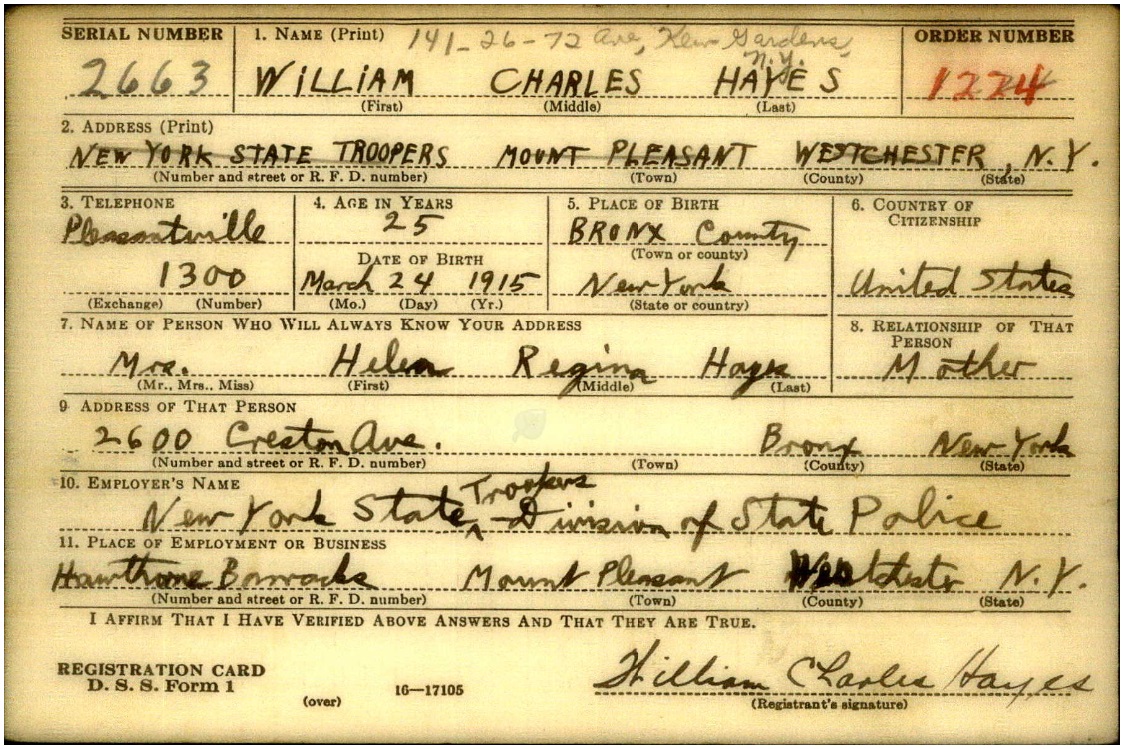
William C. Hayes was born 24MAR15 and was, according to his draft card in 1940, a New York State Policeman with the rank of Trooper, assigned to the Hawthorne Barracks in Mt. Pleasant, NY.
At some point he must have wanted to seek greener pastures, as he took the Patrolmans exam, passed with a score of 84.500 and placed 521st on the Eligibles list:
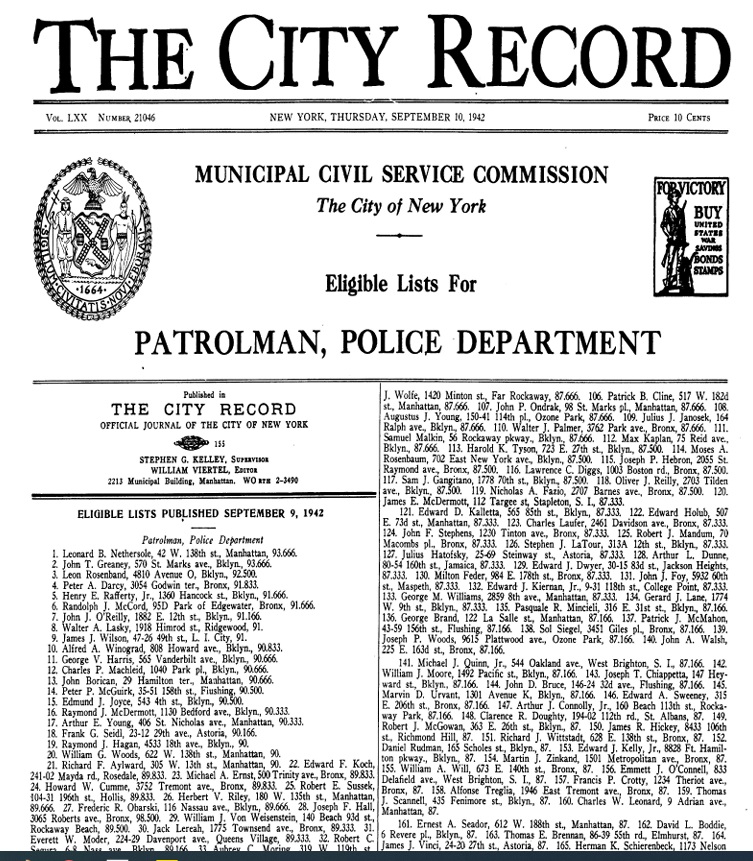
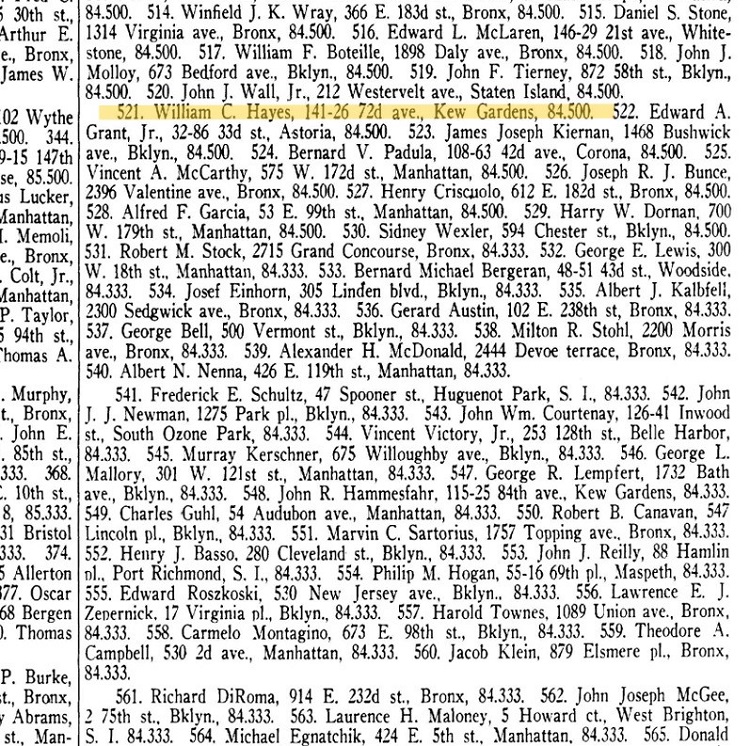
From The City Record 10SEP42
Having been placed on the Eligibles list, he was appointed a Patrolman on Probation on 21NOV42 at an annual salary of $1,320 (this went up to about $2,000-$2,250 after a year on ‘da Job):
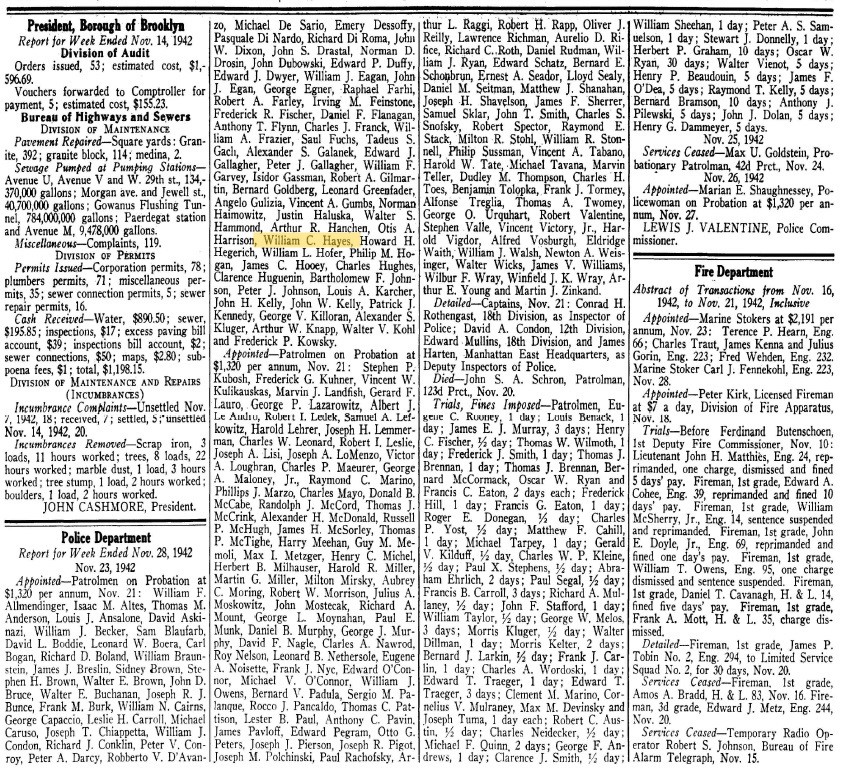
From The City Record 10DEC42 p. 4952
He seems to have done well because not only did he graduate on 17FEB43, he was also awarded an engraved revolver as the Police Commissioners Trophy, an award for having the third highest class average:
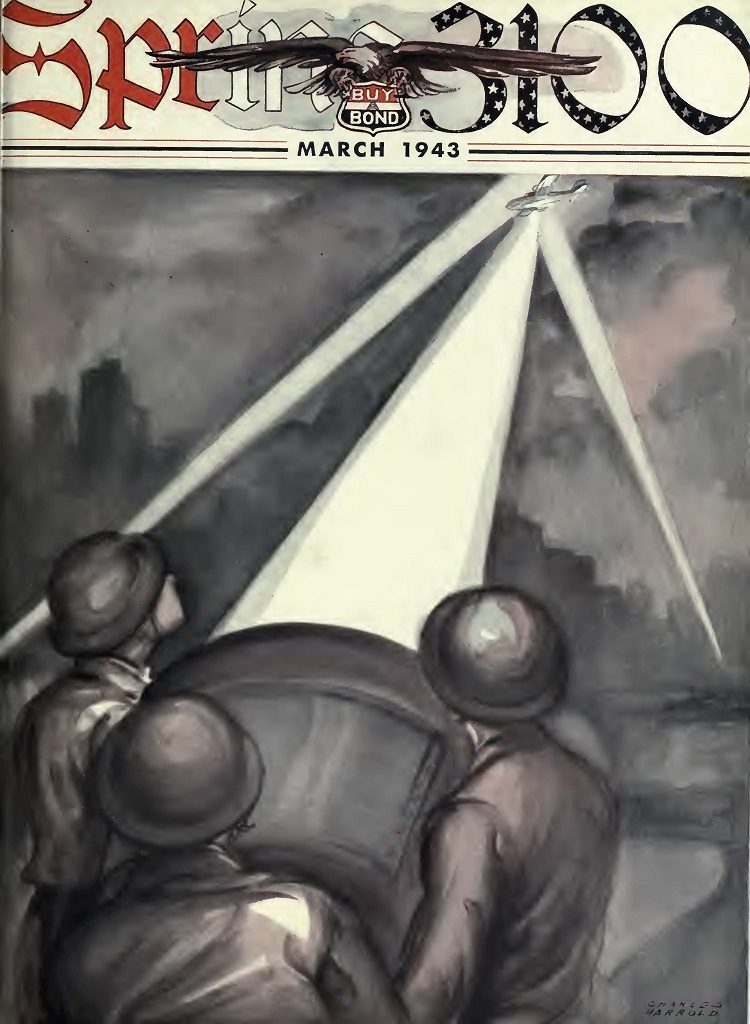
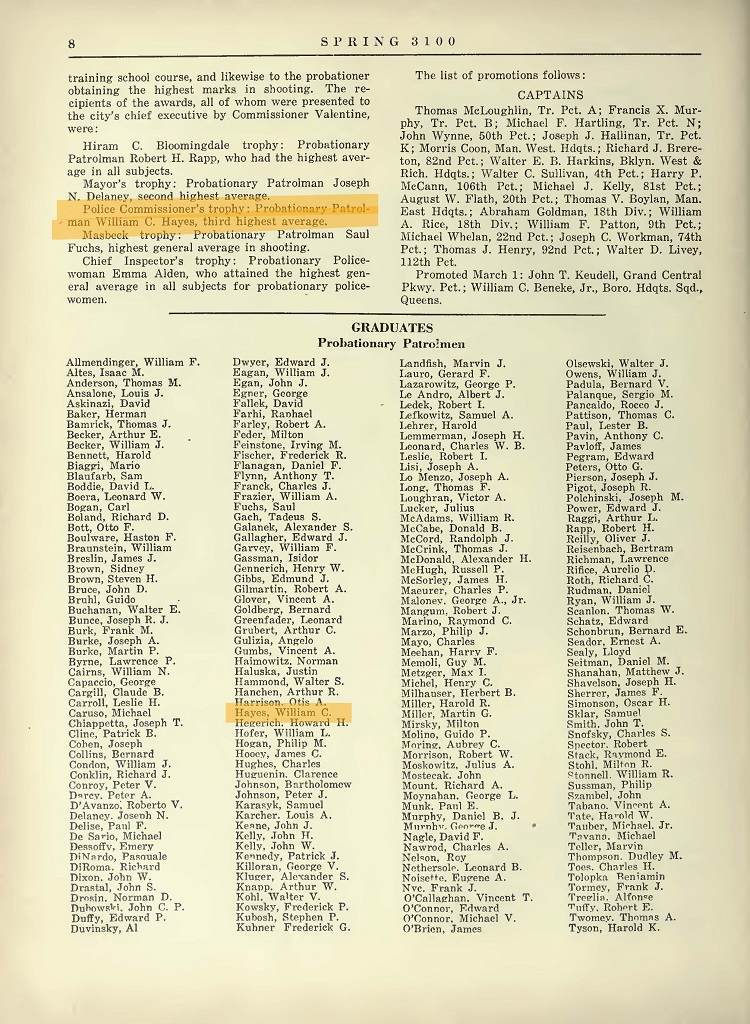
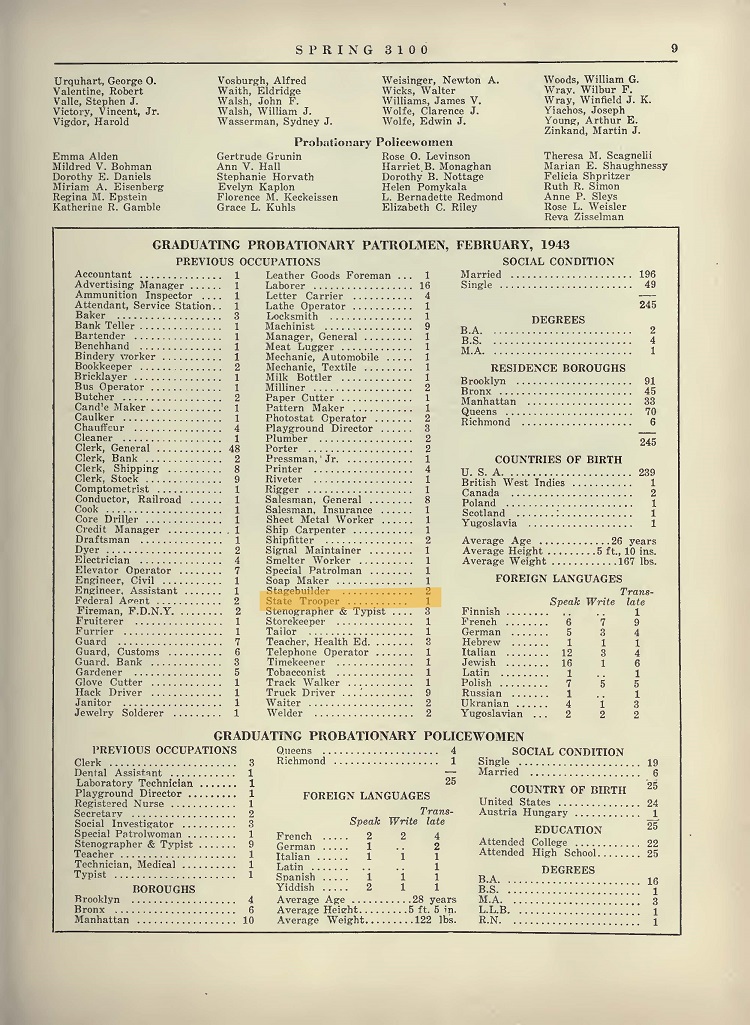
Spring 3100 March 1943
Unfortunately, I could find very little on his career with NYPD; Hayes is a fairly common name and there was just too many search query returns to wade through.
Patrolman Hayes died in Sarasota, FL in 2002.
I am very fortunate to have a small but dedicated network of friends and associates who support and aid in my research. One of them has a ‘hook’ over at the New York State Police and sent me some notes regarding Trooper Hayes:
I could not find any reference to William C. Hayes within my State Police materials; however, I found numerous references to him researching old newspapers and genealogical databases. Here is a brief sketch:
William Charles Hayes was born on March 24, 1915, at 656 East 176th St. Bronx, NY, the only child of Daniel F. and Helen R. Kenney Hayes. Daniel Hayes was a road inspector for the Borough of the Bronx.
It appears that William joined the New York State Police at SP Hawthorne, Troop K on July 1, 1939. His salary would have been $900 annually and he would have been required to live at the barracks. Troopers received 30 days of annual leave, which had to be taken at once, during the winter months. There were no days off during the summer months.
Hawthorne was Troop K headquarters and Troopers were continuously transferred to various substations every couple of months. The thinking of the State Police management during this time was that frequent transfers did not allow Troopers to get too comfortable or friendly with the local residents and thus their judgement and administration of the law would be more balanced and fairer.
His first assignment after his enlistment was at Monroe in Orange County, which was then part of Troop K and is now located within the jurisdiction of Troop F. He would have been paired with a senior Trooper for a few months. In Sept. 1939, he was sent back to Hawthorne where he most likely was kept busy engaged in janitorial duties and groundskeeping. During this time, new Troopers were observed for approximately 6 months before they were sent to the training school. If they weren’t meeting the standards, rather than waste time and resources, they were terminated.
On January 8, 1940, he was one of 10 Troop K Troopers assigned to the four-week State Police Basic Training School in Troy, NY. He graduated 2nd in his class academically, on February 1, 1940, with an average of 97.38. For this he was presented a copy of “Underhill’s Criminal Evidence.”
Upon graduation, he was transferred to Bay Shore, Long Island which was then part of Troop K (now Troop L). After a couple of months, he was transferred to another Long Island location – Brightwaters.
In June 1940, he was transferred to Millbrook where it appears he was very active enforcing the vehicle and traffic law and investigating traffic related accidents. The last reference that I found of him as a Trooper was in January 1941. He was still stationed in Millbrook at that time. His salary would have been static at $900. The constant transfers and the barracks life, coupled with 24-hour tours of duty caused many to leave the Troopers for greener pastures.
I hope this helps with your project.
Thanks friend!
Best,
RM Vivas